
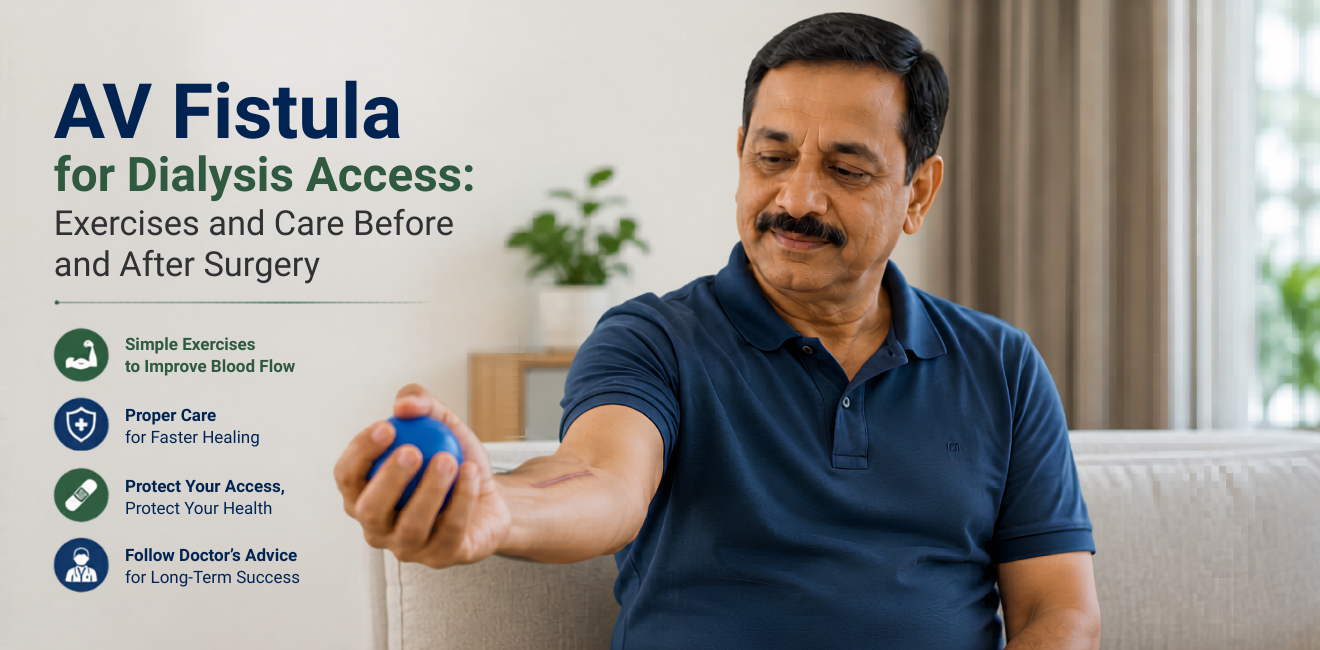
AV Fistula for Dialysis Access: Exercises and Care Before and After Surgery
Table of Contents
- Introduction to AV Fistula for Dialysis
- What Is AV Fistula for Dialysis
- Why AV Fistula Is Preferred for Dialysis Access
- Care Before AV Fistula Surgery
- Exercises Before AV Fistula Surgery
- Care After AV Fistula Surgery
- Exercises After AV Fistula Surgery
- How to Check If Your AV Fistula Is Working
- Possible Complications
- When to See a Doctor
- Conclusion
- FAQs
Introduction
Dialysis patients need a safe and effective method of accessing their circulatory system to administer therapy. The most widely used is the AV fistula, which provides long-term, effective dialysis access. It has to be properly prepared and cared for to succeed and last. Not all patients know that basic care routines and exercises can have a significant positive impact. This blog covers everything you need to know about AV fistula, including its significance, pre- and post-surgery care, and exercises to aid recovery.
What Is AV Fistula for Dialysis
Understanding the meaning of a fistula in dialysis is crucial for patients planning to undergo dialysis. An arteriovenous (AV) fistula is a connection between an artery and a vein, typically in the arm. This relationship enables blood to circulate efficiently, as it becomes easier to use dialysis machines to filter the blood.
This is done with the help of dialysis access surgery, wherein the surgeon connects a vein and an artery. As time passes, the vein grows stronger and larger due to increased blood flow, thereby becoming an appropriate vein for a series of dialysis.
AV fistula is considered one of the best and most durable options for dialysis access.
Why AV Fistula Is Preferred for Dialysis Access
AV fistula is regularly advised as the option of first choice in patients who have to be put on dialysis long-term. It offers enhanced blood flow compared to other access methods, thereby improving the effectiveness of the treatment.
Another merit is its long-lasting nature. When the fistula is mature, it may last for years when well cared for. It also poses a lower risk of infection and thrombosis than other materials used in dialysis access surgery.
These advantages make the AV fistula one of the most sought-after by patients on dialysis.
Care Before AV Fistula Surgery
AV fistula surgery is an important procedure to prepare for to ensure a successful treatment. The procedure is recommended after the patient’s area is clean and free of infection.
It is vital to prevent wounding the arm on which the fistula is going to be made. All the doctor’s medical instructions should also be adhered to. This can involve managing existing health conditions and practicing good hygiene.
Proper preparation can aid in the safe execution of the surgery and the formation of the fistula.
Exercises Before AV Fistula Surgery
In other instances, physicians might prescribe AV fistula exercises before surgery to help strengthen veins. These are most often easy exercises that involve gentle hand movements.
Light exercises, such as squeezing a soft ball, may help make the veins more visible so they can be used during the procedure. Nonetheless, the exercises are not recommended without a medical practitioner’s recommendation.
Preoperative venous strengthening may improve outcomes and expedite fistula healing.
Care After AV Fistula Surgery
AV fistula must be properly cared for after surgery to ensure proper healing and lifelong functionality. To avoid infection, patients are advised to maintain the surgical area hygienically.
Do not lift heavy or strain the arm where the fistula has been made. Caution should also be taken not to sleep on that arm, as this might also affect blood flow. After receiving medical recommendations on the care to be taken regarding AV fistula, complications can be avoided, and healing can be well supported.
Monitoring and maintaining hygiene should be a significant part of the procedure to ensure its success.
Exercises After AV Fistula Surgery
The exercises are important to perform after AV fistula surgery to help the fistula mature and function well. Squeezing a soft ball is one of the most effective exercises recommended.
This helps improve blood flow and gradually strengthens the vein. These exercises can be performed regularly to improve fistula function and prepare it for dialysis.
Nevertheless, exercises should be initiated after a doctor’s visit to ensure safety and effectiveness.
How to Check If Your AV Fistula Is Working
It is vital to inform patients receiving dialysis on how to check that the AV fistula is functioning. The existence of a vibration, a so-called thrill, can be detected over the fistula site and is one of the main indicators.
The other indicator is a soft sound, known as a bruit, which is audible with a stethoscope. Patients should also observe any unusual swelling, pain, or changes in the area.
Possible Complications
Although AV fistula is considered a safe procedure, it may be associated with a few potential complications that may concern patients. These can be an infection of the surgical site, obstruction of the fistula, or arm swelling.
Treatment of these problems should be timely, and this can be achieved through early detection. Good treatment and adherence to medical recommendations can greatly reduce the risk of complications.
When to See a Doctor
Patients are advised to consult a doctor if they notice symptoms such as persistent pain, redness, or a bloody fistula. sudden swelling or alterations in fistula function should also be considered.
Timely consultation will help solve problems at the initial stage and avoid complications.
Conclusion
An AV fistula is significant in confirming that dialysis is well-managed. Regular exercise and suitable care before and after surgery can help preserve its functionality and endurance. It is crucial to learn how to treat the fistula and follow it to achieve long-term success. Patients planning to undergo AV fistula surgery to undergo dialysis in Vadodara need to seek advice and support from a specialist. Early treatment and care may significantly influence treatment outcomes.
