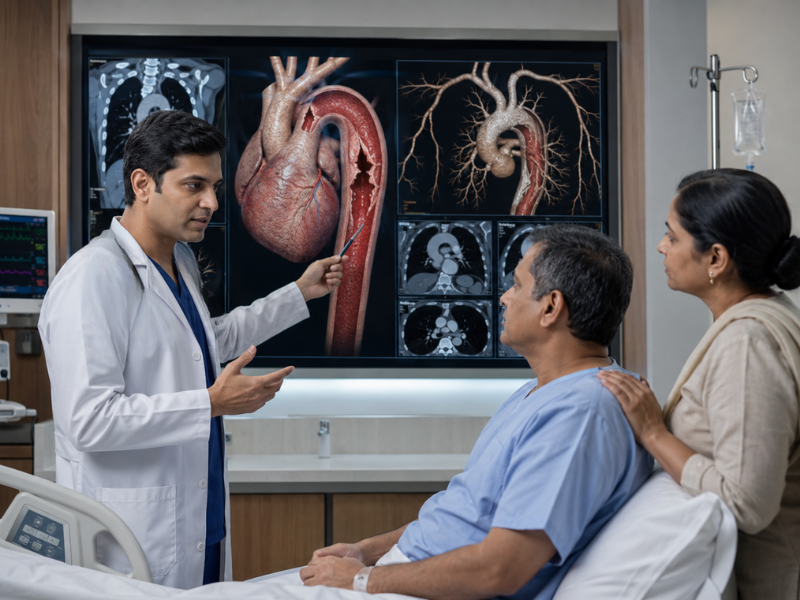
Aortic dissection is a serious and potentially life-threatening condition that requires immediate medical attention. It occurs when a tear in the inner layer of the aorta disrupts normal blood flow and weakens the vessel.
Aortic dissection is a life-threatening condition in which a tear forms in the inner layer of the aorta, the body’s largest blood vessel. This tear allows blood to flow between the layers of the aortic wall, causing them to separate. If left untreated, this can lead to severe complications, including rupture, organ damage, or death.
Aortic dissection is classified into two main types: –
Type A dissection – Affects the ascending aorta (near the heart) and requires emergency surgery
Type B dissection – Occurs in the descending aorta and may be managed with medication or surgery, depending on severity
This is a medical emergency requiring immediate intervention. Every minute counts—early recognition and rapid treatment are critical to survival and recovery.
Sudden, severe chest pain or upper back pain (often described as tearing or ripping)
Pain that may radiate to the neck, jaw, or abdomen
Shortness of breath or difficulty breathing
Sudden weakness or paralysis
Difficulty speaking or vision problems
Loss of consciousness
Difference in blood pressure or pulse between the left and right arms
Chronic high blood pressure (hypertension) – The most common risk factor
Atherosclerosis – Plaque buildup that weakens arterial walls
Genetic connective tissue disorders (such as Marfan syndrome or Ehlers-Danlos syndrome)
Bicuspid aortic valve or other congenital heart conditions
Previous aortic or cardiac surgery
Blunt chest trauma or injury
Advanced age (most common in people aged 60-80)
Smoking and drug use (particularly cocaine)
Recognizing these symptoms and risk factors early is important for timely diagnosis and preventive care. Since aortic dissection is a vascular emergency, immediate medical attention is necessary if any warning signs appear.
Timely and correct diagnosis is very important in the management of aortic dissection. A specialist will examine symptoms and perform sophisticated imaging tests to prove the disorder.
The diagnostic methods can comprise:
These tests are used to determine the severity and inform the decision towards either aortic dissection surgery with or without medical interventions.
Aortic dissection is treated depending on the type, location and severity of the tear. The patient needs to be stabilised in the nearest medical facility.
In other instances, drugs are taken to regulate blood pressure and lower stress on the aorta.
Surgery is usually necessary, particularly in extreme cases. The torn part of the aorta can be repaired or substituted to resume normal blood circulation.
In some patients, minimally invasive procedures can be used to implant a stent graft to support the compromised area. The appropriate mode of treatment is critical for successful treatment of aortic dissection and long-term recovery.
Recovery from aortic dissection depends on the type of dissection, treatment received, and individual patient factors. Long-term follow-up care is essential to prevent recurrence and manage ongoing vascular health.
Post-treatment care includes:
Expert in advanced vascular care.
Excellence in every surgery.
Quick recovery, pain-free.
Detailed explanations, caring nature.
Dr. Hiten Patel combines clinical precision with compassionate care, ensuring every patient feels supported throughout their treatment journey. His approach is focused on delivering not just results, but reassurance and lasting relief.
Expert Diagnosis. Advanced care. better outcomes.
Trusted Vascular Specialists
Minimally Invasive
& effective
Personalized care
for lasting results.
It is a disease in which a tear develops in the inner lining of the aorta, allowing blood to flow between the layers of the vessel wall.
Typical symptoms include sudden, severe chest or back pain, shortness of breath, and weakness.