An abdominal aortic aneurysm (AAA) is a serious vascular condition that requires careful monitoring and, in some cases, timely intervention. Early detection and appropriate treatment are essential to preventing life-threatening complications. Understanding the symptoms, risk factors, and treatment options can help patients make informed decisions about their vascular health.
An abdominal aortic aneurysm (AAA) is a condition where a part of the aorta, the largest blood vessel in the body, becomes weakened and bulges outward in the abdominal area. After a conclusive period, this bulge may become so enlarged that it may start protruding out and may rupture, then it can pose serious life threats too.
The problem happens when it’s not detected, as soon as it appears. Timely abdominal aortic aneurysm treatment plays a crucial role in preventing complications. Depending on the size and growth of the aneurysm, regular medical monitoring or even surgery, as directed by your physician, may be required.
Abdominal aortic aneurysm may not show noticeable symptoms in the early stages. As it enlarges, symptoms can develop due to weakening of the arterial wall and associated risk factors.
Pulsating pain in the stomach.
Deep, constant pain in the stomach or side
Persistent and possibly increasing back pain.
Tenderness in the abdominal area
In old age, the blood vessels become weak
A chain smoker, who is also a major cause of vascular damage
Stress on the major walls of the arteries caused by high blood pressure in the patient
Accumulation of plaque, which is a condition connected with Atherosclerosis and is pretty serious
Genetics
Early identification of symptoms and associated risk factors can help ensure timely diagnosis and proper treatment before the condition progresses to a critical stage.
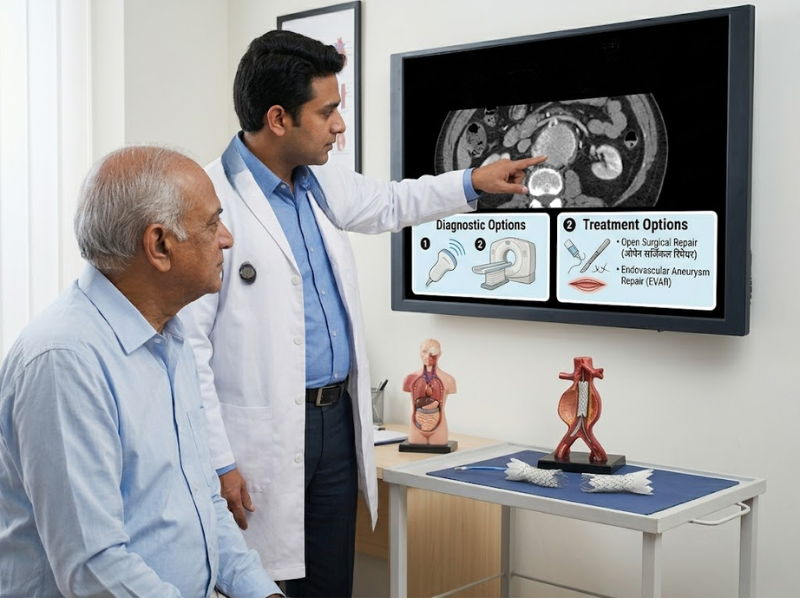
Diagnosing an abdominal aortic aneurysm typically involves imaging tests that help determine the location, size, and growth rate of the aneurysm. A vascular specialist will evaluate your symptoms, medical history, and risk factors to recommend appropriate diagnostic procedures.
Typically used diagnostic procedures are:
These tests are essential for determining whether active monitoring or surgical intervention is needed. Regular screening is particularly important for individuals over 65, smokers, and those with a family history of aneurysms.
Smaller aneurysms that are not at immediate risk of rupture may be managed through regular monitoring with imaging tests. Your doctor will schedule periodic ultrasounds or CT scans to track any changes in size. During this time, lifestyle modifications and blood pressure management are important to slow aneurysm growth.
A surgery is suggested when the aneurysm becomes quite enlarged. This can be done by:
Open Surgery: Removing the weak area with a graft.
Endovascular Repair (EVAR): It’s invasive only to a small extent, and it’s done using a stent graft.
Surgery is recommended when the aneurysm reaches a certain size or shows signs of rupture risk. The procedure type, open surgery or minimally invasive endovascular repair (EVAR), is determined by the surgeon based on the aneurysm's location, size, and the patient's overall health.
Your vascular surgeon will discuss all available options to help you make an informed decision about the best treatment approach.
Post-treatment may involve:
Expert in advanced vascular care.
Excellence in every surgery.
Quick recovery, pain-free.
Detailed explanations, caring nature.
Dr. Hiten Patel combines clinical precision with compassionate care, ensuring every patient feels supported throughout their treatment journey. His approach is focused on delivering not just results, but reassurance and lasting relief.
Expert Diagnosis. Advanced care. better outcomes.
Trusted Vascular Specialists
Minimally Invasive
& effective
Personalized care
for lasting results.
The symptoms can include abdominal pain, back pain, or a pulsating sensation in the abdomen.
When the aneurysm reaches a certain size or shows signs of rapid growth, surgery is advised.
Like any major procedure, it carries risks, but proper evaluation and planning help ensure safe outcomes.
Small aneurysms are usually monitored regularly through imaging tests as advised by the doctor.