
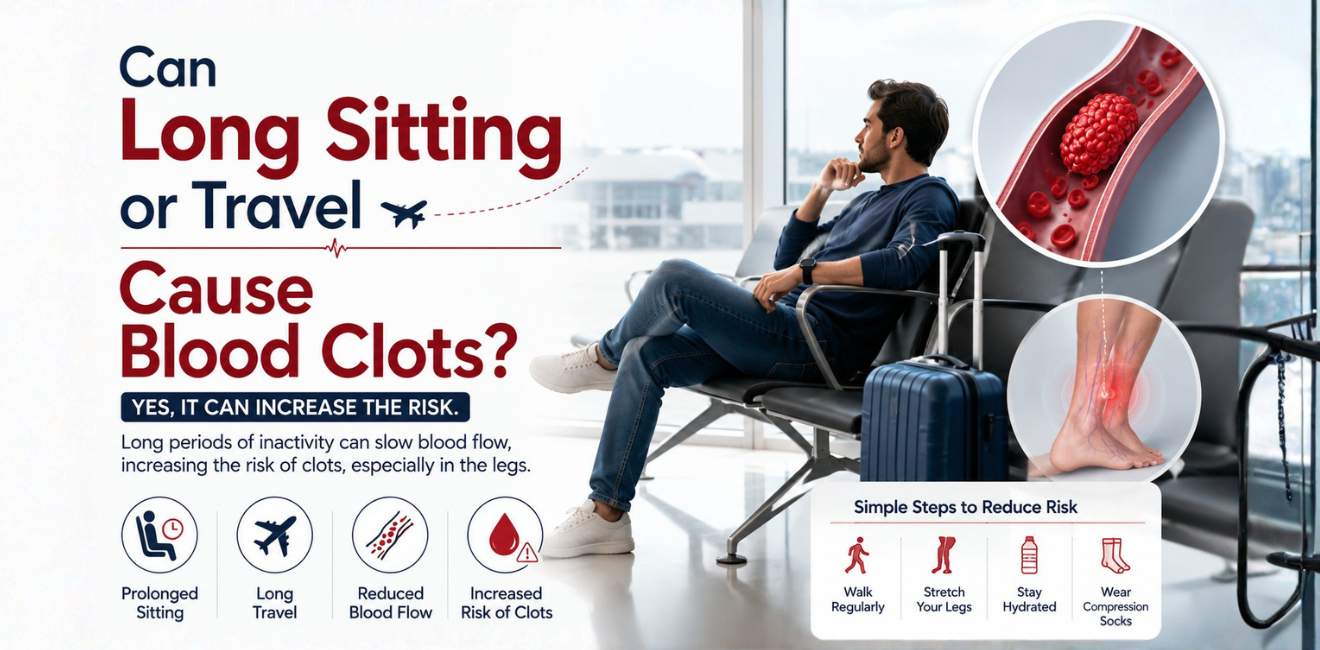
Can Long Sitting or Travel Cause Blood Clots?
First of all, it is vital to remember that being seated for an extended period of time, whether during a long flight, a long trip in a car, or simply working in an office, raises the probability of blood clots forming in your legs, called deep vein thrombosis, or DVT.
However, this doesn’t mean that you should be afraid to travel, because not everyone experiences these issues. However, it would be best to know about this process and how to avoid it.
How Does Sitting Still Cause a Blood Clot?
Leg veins need movement to allow proper circulation. Each step taken by the body, or flexing of the foot, will cause the calf muscle to squeeze against the vein, pushing the blood upwards towards the heart.
Inactivity causes the process to cease. The slow flowing of blood in the deep veins of the legs occurs during prolonged periods of sitting; the most common areas are the knee joint and calves. Slow movement of blood in pooling increases its probability to clot. This condition is associated with long-distance traveling and is commonly referred to as “economy class syndrome.”
Who Is More at Risk?
Extended periods of sitting can already be dangerous by themselves, but become even more so when certain additional conditions are met. In case one or more of the following are true about your health situation:
– You are on a long trip or spend more than four hours sitting
– You previously suffered from a blood clot or DVT, or there is a family history of clots
– You are pregnant or just gave birth
– You are taking contraceptive pills or hormonal therapy
– You are overweight, a smoker or older than sixty
– You had surgery or a leg injury in the recent past
– You suffer from varicose veins or a clotting disorder
It becomes even more crucial to pay attention to the issue at hand.
Warning Signs of a Blood Clot in the Leg
While not all blood clots in the legs exhibit noticeable signs, when they do, it is usually localized on one leg and may include the following symptoms:
– Swelling in one leg, usually the calf
– Leg pain or tenderness, which can feel like a deep muscle cramp
– Skin warmth on the affected part of the leg
– Leg redness or a blue discoloration
– A heavy feeling in the leg
Do not delay consulting your doctor if you experience any of these symptoms while traveling.
When It Becomes an Emergency
That’s when you need to take it seriously. A blood clot in the leg may come off and make its way to the lungs, resulting in a condition called pulmonary embolism, which could be fatal. In case you experience difficulty breathing, chest pain, an increased heart rate, coughing, dizziness – especially after a long travel – contact emergency services right away.
How to Prevent Blood Clots When Travelling
The good news is that prevention is simple and effective. On any long trip or seated stretch:
- Move regularly. Get up and walk every hour or two on flights, or stop on long drives.
- Do ankle exercises. Pump your feet up and down and circle your ankles while seated to keep the calf pump active.
- Stay hydrated. Drink water and go easy on alcohol and coffee, which dehydrate you.
- Wear loose clothing, and consider compression stockings if you are higher risk.
- Avoid crossing your legs for long periods.
- Take breaks at your desk too, not just when travelling.
If you are in a higher risk group, ask your doctor before a long journey whether extra precautions are worth taking.
Concerned About Blood Clots? Talk to Dr. Hiten Patel in Vadodara
If you often sit for long hours, travel frequently, or have noticed swelling or pain in one leg, it is worth getting assessed. As a trusted vascular specialist in Vadodara, Dr. Hiten Patel can check your risk and guide you on prevention and treatment. Searching for a DVT specialist near me? Book your consultation today and travel with peace of mind.
