
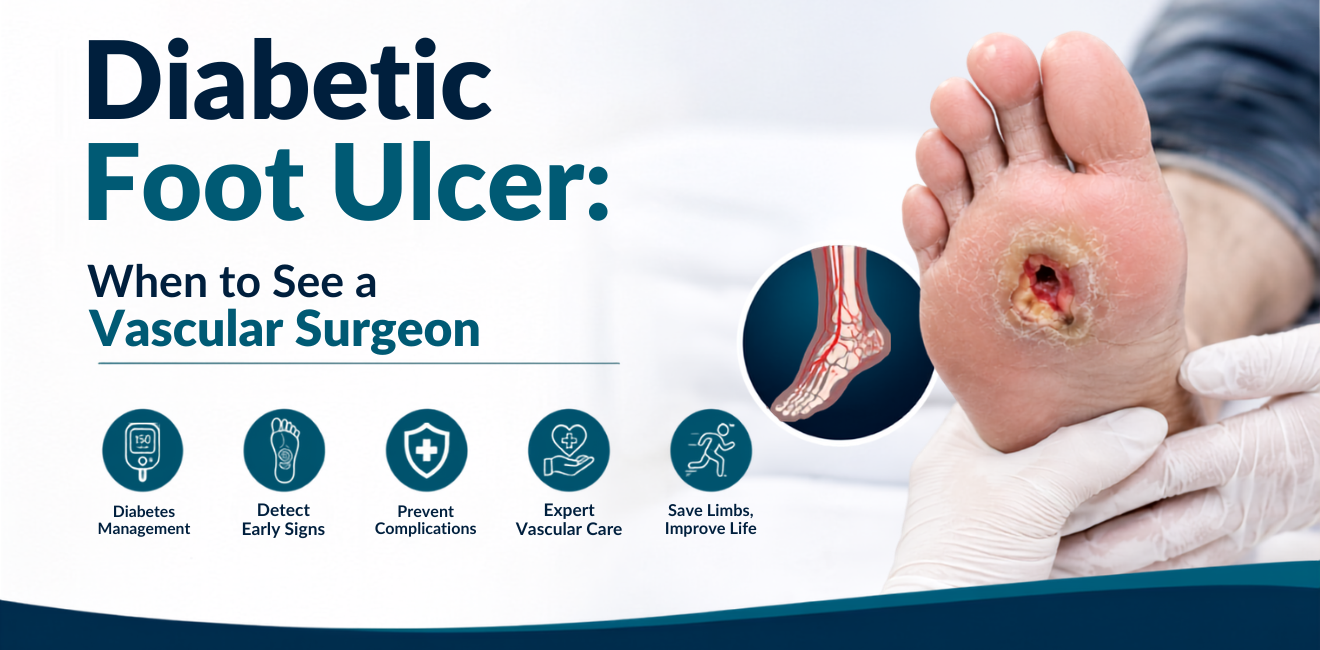
Diabetic Foot Ulcer: When to See a Vascular Surgeon
The main idea is that if you suffer from diabetes and a foot injury that did not heal within two weeks, you should see a specialist. In case of suspected poor circulation, you need to see a vascular surgeon. A diabetic foot ulcer is much more than just a wound that takes long to heal. It means your foot doesn’t get enough blood, which makes everything different.
Most people try to ignore wounds and let them heal. But when you have diabetes, you need to take things seriously. Let me tell you what a diabetic foot ulcer is and the symptoms that show you need a professional to help you.
What Is a Diabetic Foot Ulcer?
Foot ulcers are an open wound or sore that develops on the lower part of the foot among diabetics. There are two factors that make diabetics prone to foot ulcers.
Firstly, the presence of nerve damage (neuropathy), which reduces feeling in the feet makes it difficult for you to feel when there is a blister or sore developing.
Secondly, there is poor circulation because diabetes is associated with peripheral arterial disease in that it narrows the blood vessels in the legs and feet, reducing blood circulation and thereby affecting the healing process of any wound.
Therefore, the combination of both factors can cause a wound to develop into a foot ulcer.
Why Circulation Is the Real Concern
For wounds to heal well, a good blood supply is needed because it is the blood which provides the tissues with what they need for the repair process to be successful.
For a significant number of diabetic patients, the arteries of the legs become narrowed, and therefore, the wound does not get all the elements it requires to heal itself. Therefore, in cases of non-healing ulcers of the feet, we have another circulatory problem that requires a special doctor, i.e., a vascular surgeon.
When to See a Vascular Surgeon
This is the part that matters most. Do not wait if you notice any of these:
- A foot wound that has not healed in two weeks, or is getting bigger
- Signs of poor circulation such as cold feet, pale or bluish skin, or weak pulses
- Pain in the foot or leg at rest, especially at night
- Redness, swelling, warmth, pus, or a bad smell, which suggest infection
- Black or darkening tissue around the wound, a sign tissue may be dying
- Numbness with any wound, since you may not feel it worsening
Any one of these is a reason to be seen quickly. Together, they are urgent. Early vascular assessment can be the difference between healing a foot and losing part of it.
What a Vascular Surgeon Can Do
Assessment of how well blood flows to your foot starts with a basic examination through pulses and ultrasounds. In case there is constriction of the arteries, minimally invasive techniques will be used to increase the blood flow by opening the blocked artery. Alongside, the wound will be treated together with infection while pressure will be reduced on the affected area. Everything done is geared towards saving your foot and allowing you to walk.
How to Protect Your Feet With Diabetes
Prevention is far easier than treatment. Simple daily habits help:
- Check your feet every day for cuts, blisters, redness, or swelling
- Wash and dry your feet gently, especially between the toes
- Never walk barefoot, and wear well fitting, comfortable shoes
- Keep your blood sugar controlled, which protects both nerves and vessels
- See a doctor early for any wound, however small
Worried About a Foot Wound? See Dr. Hiten Patel in Vadodara
If you have diabetes and a wound that will not heal, or signs of poor circulation in your feet, do not wait. As a trusted vascular surgeon in Vadodara, Dr. Hiten Patel can check your circulation and act early to protect your foot. Searching for a diabetic foot specialist near me? Book your consultation today and give your foot the best chance to heal.
