
Difference Between Vascular and Endovascular Surgery Explained
Table of Contents
- Introduction to Vascular Conditions
- What Is Vascular Surgery
- What Is Endovascular Surgery (Meaning and Procedure)
- Difference Between Vascular and Endovascular Surgery
- 4.1 Procedure Type
- 4.2 Recovery Time
- 4.3. Risk Level
- 4.4 Hospital Stay
- When Is Vascular Surgery Needed
- When Is Endovascular Surgery Preferred
- Is Endovascular Surgery Safe
- Recovery Time for Endovascular Surgery
- Which One Is Better for Patients
- Conclusion
- FAQs
Introduction
Vascular and endovascular treatments are two methods of treating vascular issues. Vascular health issues range from simple varicose veins, leg swelling, from mild to severe for DVT and peripheral vascular issues. They are both intended to restore normal blood circulation, but the way the procedures are conducted on the person differs greatly. Their rebuilding processes also vary significantly.
What Is Vascular Surgery
To get familiar with treatment options, one should understand what vascular surgery is. Vascular surgery is a traditional open surgical procedure used to treat vascular diseases. It entails creating an opening to directly reach the affected artery or vein.
Such surgery is usually recommended for complex or severe conditions, when blockages are extensive, or when other treatment options are not appropriate. The invasive procedure involved in vascular surgery typically takes a longer recovery period, as it is an effective treatment. With modern technology, it has become very safe and the recovery process is also fast.
What Is Endovascular Surgery (Meaning and Procedure)
Endovascular surgery is a minimally invasive technique for treating vascular diseases. This technique can be performed through a small skin puncture rather than large incisions, using a thin tube called a catheter.
So, what is endovascular surgery? It is one of the latest methods that enable physicians to treat conditions such as blockages or varicose veins with minimal tissue damage. Endovascular surgery is popular because it has been proven effective and allows quick recovery (for varicose veins).
It is also referred to as minimally invasive vascular surgery, since it causes less pain and shortens hospitalization and recovery periods compared to open surgery.
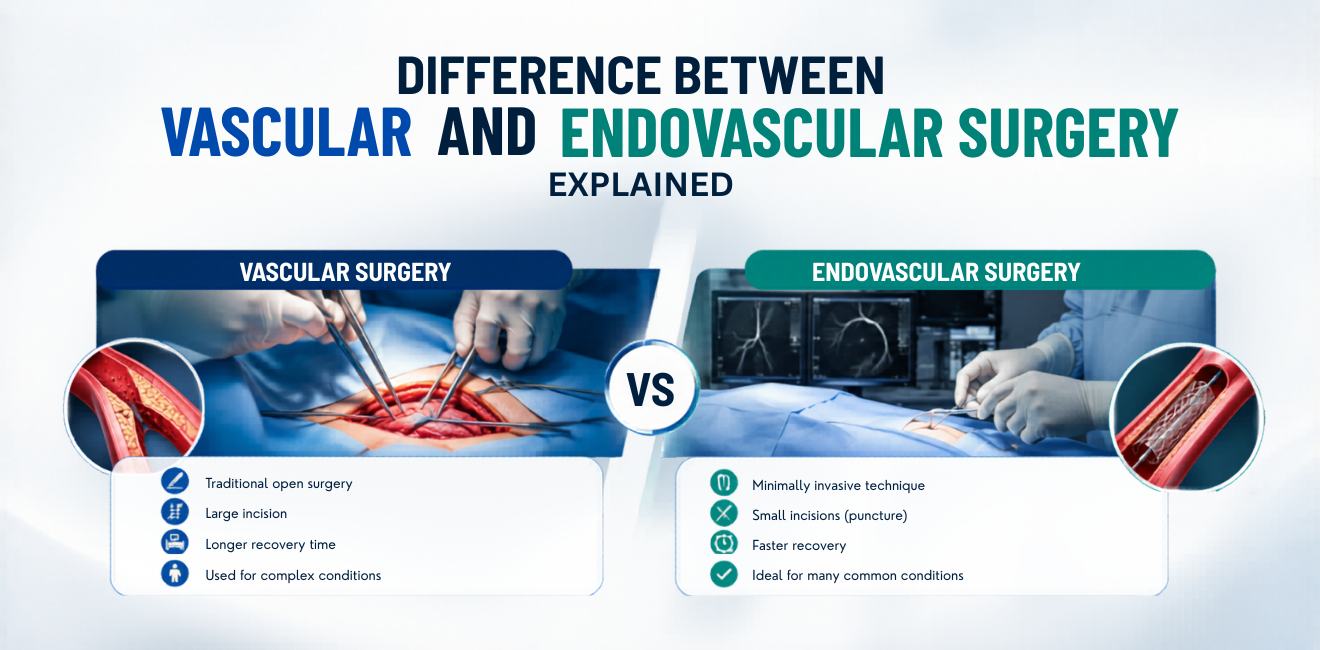
Difference Between Vascular and Endovascular Surgery
It is vital to understand the distinction between vascular and endovascular surgery to select the appropriate treatment. Both procedures are used to treat vascular conditions, but they differ in technique, recovery time, and overall approach.
Procedure Type:
Vascular surgery often requires larger incisions. Whereas endovascular surgery involves punctures with catheters.
Recovery Time:
A vascular treatment is an invasive procedure and has a longer recovery period due to its invasive nature.
An endovascular treatment heals quickly, and recovery is faster.
Risk Level:
The risk of greater blood loss and infection is higher in the vascular types, as the incisions are also larger.
In the endovascular surgery, these risks are very minimal.
Hospital Stay:
Patients treated through vascular surgery have to stay longer in the hospital, and patients who undergo endovascular treatment can leave early.
Most patients choose the type of treatment they want based on this outcome, as this choice makes a significant difference in their lives.
When Is Vascular Surgery Needed
Vascular surgery is frequently specified for severe or complex conditions that are not treatable with minimally invasive procedures. They could contain large artery blockages, big aneurysms, or severe vascular disease.
In these situations, open surgery can allow the surgeon to directly repair or replace the damaged blood vessel. Different forms of vascular surgery exist depending on the condition, providing effective restoration of blood flow.
When Is Endovascular Surgery Preferred
Endovascular procedures are particularly useful for people seeking early treatment for vascular diseases. Since they have gone early, they have the opportunity to undergo invasive procedures. They can also avoid open surgeries.
Contemporary endovascular surgeries are often used to treat conditions such as constricted arteries, varicose veins, small blockages in the artery, and vascular malformations.
Is Endovascular Surgery Safe
One of the most common questions patients ask is, “Is endovascular surgery safe?” Overall, it can be observed as a safe and well-organized alternative for an expert specialist.
Due to its minimal invasiveness, the danger of complications such as infection and extreme bleeding is reduced compared to open surgery.
Recovery Time for Endovascular Surgery
Endovascular surgery has a shorter recovery period, a major benefit. As the process involves tiny incisions, patients experience less pain and recover more quickly.
The majority of patients will be able to resume normal functions sooner than with conventional surgery. The time spent in the hospital decreases, so one gets back to their daily routine faster.
This makes endovascular surgery an easy choice for a wide range of patients seeking effective treatment with minimal downtime.
Which One Is Better for Patients
The decision to choose vascular or endovascular surgery is based on several factors, including the severity of the condition, general health, and medical history. A single choice is not the best for everyone.
There are numerous situations when physicians assess the situation and prescribe the most appropriate method. The distinction between vascular and endovascular surgery will enable patients to be involved in the decision-making process and select the treatment that best suits their needs.
Conclusion
Vascular and endovascular operations are significant in the management of vascular conditions. Although vascular surgery is suitable for complicated cases, a less invasive procedure, such as endovascular surgery, offers a faster recovery. The treatment and its early diagnosis are imperative to improved results. A visit to a specialist in vascular issues may help determine the best treatment approach, depending on the case.
