How Does Peripheral Arterial Disease Affect Blood Flow in the Legs?
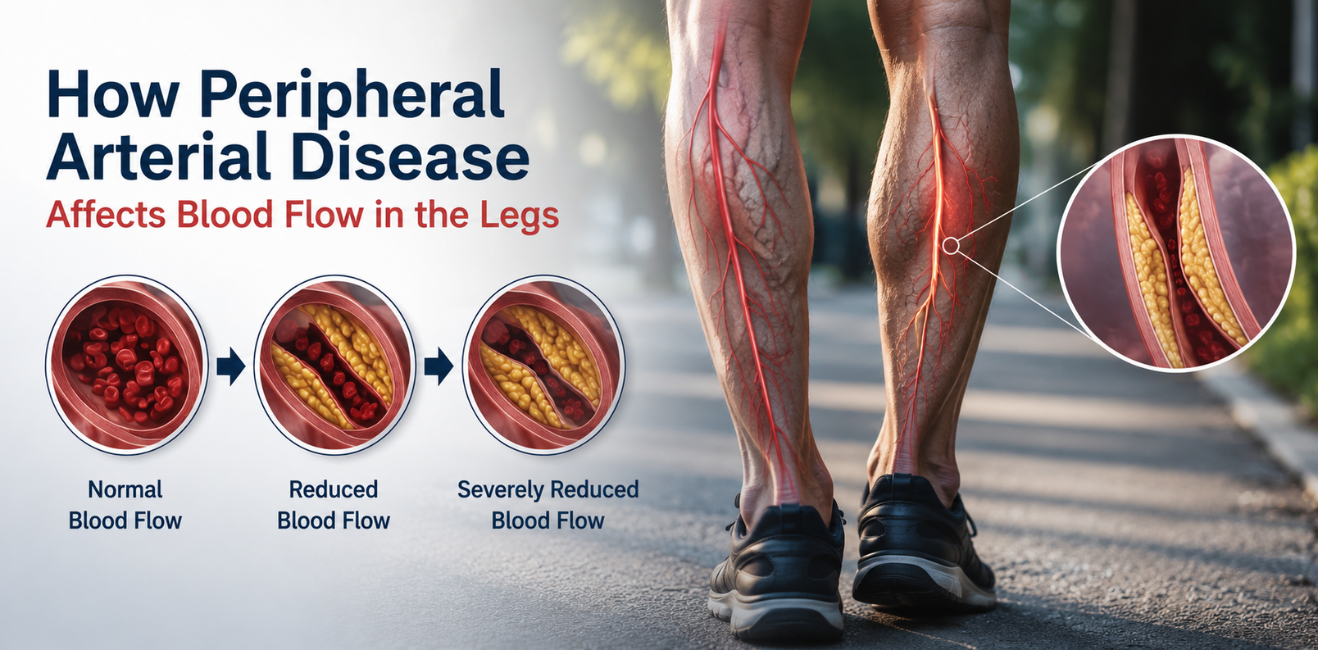
In Short, peripheral arterial disease causes the arteries that deliver oxygenated blood to your legs to narrow or block, resulting in insufficient blood flow to your muscles and tissues. Atherosclerosis or the accumulation of fatty plaque inside the arterial walls, is the most frequent cause. Blood flow decreases as the channel narrows, and your legs begin to complain, often with cramping pain that goes away when you relax.
The most prevalent cause is the accumulation of fatty plaque within the arterial walls, a process known as atherosclerosis. As the channel narrows, blood flow decreases, and your legs begin to complain, often with cramping pain that subsides when you rest.
Let me explain what is truly going on within the leg, what indicators to look for and when it is necessary to get evaluated.
What Is Peripheral Arterial Disease?
Peripheral arterial disease (PAD) is a circulation problem. Your arteries are the pipes that carry fresh, oxygen-rich blood from the heart to the rest of the body. In PAD, those pipes get narrowed by plaque, a sticky mix of fat, cholesterol, and calcium that slowly builds along the artery wall.
The legs are where this shows up most often. When a leg artery narrows, the muscles below it are left short of fuel, especially when they are working hard. That is why the first clue is usually felt during movement rather than at rest.
How PAD Reduces Blood Flow Step by Step
Here’s how PAD impacts blood flow in the legs:
- Plaque builds up inside the artery, causing the lumen to narrow.
- Blood flow slows, allowing less oxygen to reach the muscles downstream.
- During exercise, the muscles require more oxygen than the restricted artery can provide, resulting in cramping or soreness.
- At repose, demand decreases, discomfort subsides, and the cycle continues.
- If the condition develops, blood flow can become so low that even resting tissue suffers, resulting in nighttime discomfort, poor healing, or wounds that refuse to seal.
Common Signs of Poor Blood Flow in the Legs
Many individuals dismiss these as signs of ageing or fatigue, which is why PAD is frequently overlooked. Watch out for:
- Claudication is characterized by leg discomfort or cramping during walking that stops upon resting.
- Cold feet or legs, or one foot significantly cooler than the other.
- Numbness, weakness or heaviness in the legs.
- Sores on the feet, toes or ankles are slow to heal.
- Skin changes such as glossy skin, hair loss on the legs, or a pale, blueish tint.
- Weak or missing pulse in the foot.
If a wound on your foot is taking weeks to heal, you should not wait it out. Poor blood circulation in the legs can convert a minor cut into a severe one.
What Causes and Raise the Risk of PAD?
PAD and heart disease share the majority of their risk factors since they are caused by the same plaque in separate arteries. The major risk factors are smoking, diabetes, high blood pressure, high cholesterol, age over 50 and family history of vascular disease. Smoking and diabetes are by far the most serious, but the good news is that you can take action against both.
Why Early Diagnosis Matters
This is the portion you should take seriously. PAD is not only about leg discomfort. Narrowed leg arteries indicate that the same process may be harming the arteries to your heart and brain, increasing the risk of a heart attack or stroke. Catching it early allows you to slow it down, protect your legs, and save your life.
The good news is that it is often manageable. Quitting smoking, managing diabetes and cholesterol, remaining active, and, in certain situations, minimally invasive surgeries can all help restore flow and keep you walking pleasantly.
Talk to Dr. Hiten Patel in Vadodara
If your legs cramp when you walk, feel cold, or have a sore that will not heal, do not ignore it. As a trusted vascular specialist in Vadodara, Dr. Hiten Patel can assess your circulation and guide you toward the right care. Searching for PAD treatment near me? Book your consultation today and take a confident step toward healthier legs.
