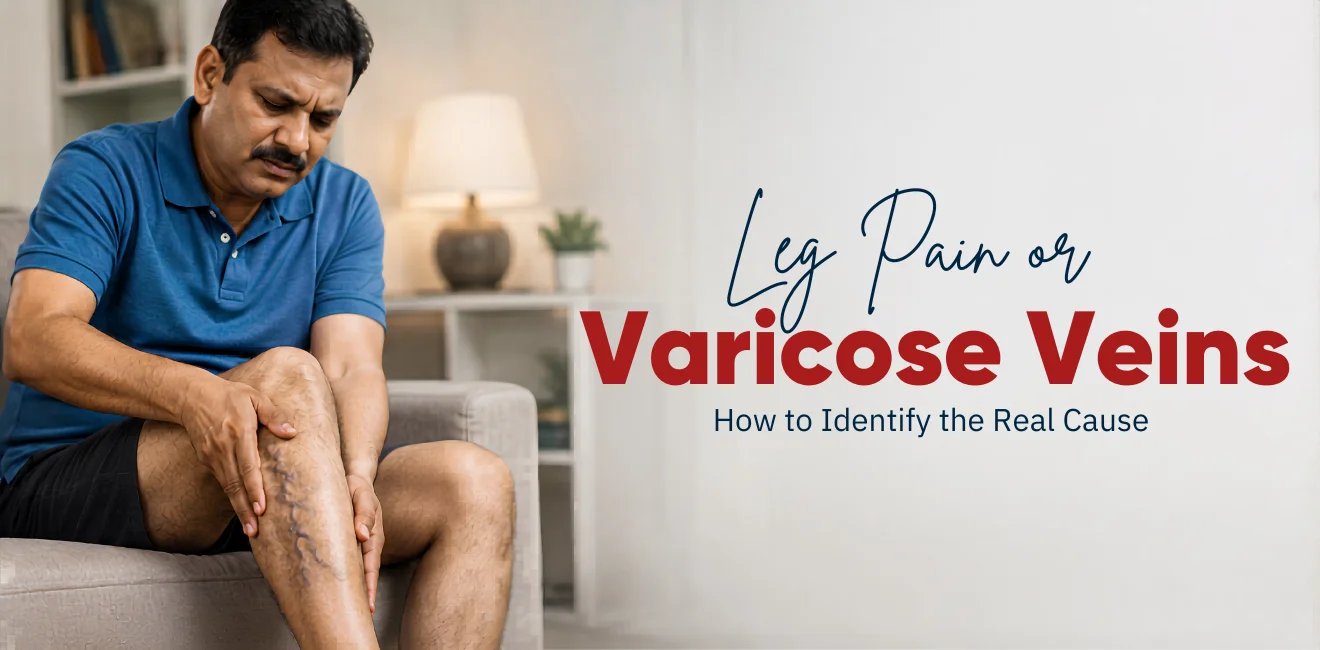
Leg Pain or Varicose Veins. How to Identify the Real Cause
Table of Contents
- Introduction to Leg Pain and Varicose Veins
- Common Causes of Leg Pain
- What Are Blood Vessels and Their Role
- What Are Varicose Veins
- Signs and Symptoms of Varicose Veins
- Leg Pain vs Varicose Veins: Key Differences
- How to Identify Varicose Veins Early
- When Should You See a Specialist
- Conclusion
- FAQs
Introduction
The majority of people have experienced leg pain at some point. The only difference is that many of them just take it lightly and ignore it, which might not always be the right thing to do. This confusion about the causes of leg pain or varicose veins is very common, mostly because both share similar symptoms. Even though a mild body pain can result from physical movement, persistent leg vein pain may be due to a vascular problem, which is not something that should or can be ignored.
To know the exact reason for the pain, you need to consult a medical practitioner, and if that doctor is a varicose vein expert, then all.
Common Causes of Leg Pain
Leg pain may have several causes, and not all of them are related to vein issues. The most common question people ask is: “Why do I have a sore leg after standing up for so long?” Cause can be misalignment of the muscle or fatigue experienced in the muscles.
One of the major reasons known to cause this kind of leg pain is muscle strain. Discomfort and heaviness in the legs may be due to poor blood circulation too. Many other factors like standing for a long period of time, sitting for a long period of time or immobility can also cause discomfort in the leg.
You should never ignore leg pain, especially if you got varicose veins, checking for signs like it’s getting worse day-by-day, persisting for a long period of time, swelling is creeping up etc.
What Are Blood Vessels and Their Role
To improve understanding of leg pain and Various conditions, it is helpful to understand how blood vessel’s function. The circulatory system consists of blood vessels, including arteries and veins.
The blood flowing in the artery is oxygenated and carries blood to other body parts, whereas the veins return it to the heart. The leg veins counter the force of gravity, aided by valves, to maintain normal blood circulation. Damage or weakening of these valves may result in blood stasis in the veins and lead to various conditions.
Healthy blood circulation depends on healthy blood vessels, and maintaining the veins is a major factor in preventing conditions such as varicose veins.
What Are Varicose Veins
Varicose veins are swollen, twisted veins that tend to be visible on the legs as a result of improper blood circulation. Understanding the causes of varicose veins is essential for diagnosing and treating them properly.
They form when the valves in the veins fail to function effectively, so blood does not flow freely and instead stagnates. For a long time, these reasons have caused vein distortion and swelling. The most common risk issues are prolonged standing, aging, obesity, pregnancy, and a genetic predilection.
Signs and Symptoms of Varicose Veins
It is important to recognize the signs and symptoms of varicose veins to diagnose and treat them early. Whereas some people might observe observable changes, others might be affected before any changes become apparent.
Common varicose veins symptoms include:
- Enlarged, twisted veins are visible under the skin
- A feeling of heaviness or tiredness in the legs
- Swelling in the lower legs or ankles
- Pain that worsens after prolonged standing
- Itching or a burning sensation around the veins
Leg Pain vs Varicose Veins: Key Differences

Knowing the distinction between leg pain, varicose veins, and other conditions helps identify the true cause of the pain. Although both can evoke the same feelings, they differ in nature.
Leg Pain:
Pain can be experienced after physical movement or exercise. It typically progresses with rest and may not be accompanied by noticeable changes in the veins.
Varicose Veins Pain:
It is typically painful following prolonged sitting or standing. It is normally associated with visual veins, swellings, and a sensation of heaviness. The prominent changes in the veins and the constant pain are the main signs.
How to Identify Varicose Veins Early
Primary diagnosis is decisive for the management of Various conditions. Identifying varicose veins will aid in prompt medical discussion. A complex of symptoms, such as heaviness, swelling, and apparent veins, cannot be ignored. When discomfort persists despite rest or lifestyle changes, it may indicate a fundamental problem.
When Should You See a Specialist
It is important to know when to be concerned about leg pain, as this is essential for maintaining vascular health. To ascertain the exact cause, a vascular specialist in Vadodara can be consulted, who can suggest suitable treatment options. In the early consultation, the results are improved, and the risk of complications is low.
Conclusion
It is essential to distinguish between leg pain and varicose veins to correctly diagnose and treat them. Although leg pain may have many causes, prolonged symptoms and observable vein changes may indicate a vascular problem. Knowing the symptoms and obtaining prompt treatment can help manage the condition.
